Walo, Diass, Kolda: battery storage arrives on Senegal’s grid
In under two years, Senegal has gone from no batteries on its grid to several hundred MWh in service, under construction or out to tender. An overview, and what it means for your site.
Why this matters
- Walo (20 MWh), Diass (56 MWh) and the Linguère and Kolda tender (400 MWh) make storage a central part of Senegal’s grid.
- The government is targeting 40% renewables by 2030. Without storage, midday solar power is of no use at 9 pm.
- These projects will strengthen the grid, but gradually: businesses that want protection now can deploy the same technology on their own site.
Two years ago, Senegal’s grid had no battery storage plant at all. By September 2026, one is in service, a second is under construction and a tender provides for two more. This shift answers two constraints: integrating ever more solar, and holding up through the evening peak.
The projects at a glance
| Project | Storage | Paired with | Status |
|---|---|---|---|
| Walo, Bokhol (Dagana) | 10 MW / 20 MWh | 16 MW of solar | Connected August 2025, inaugurated 22 January 2026 |
| Diass (Thiès) | 56 MW / 56 MWh | Existing solar plant | Construction launched 20 April 2026 |
| Linguère and Kolda | 100 MW / 400 MWh in total | 200 + 300 MWp of solar | Senelec tender closed 22 April 2026; 24 months of construction planned |
Walo: the first, built for grid stability
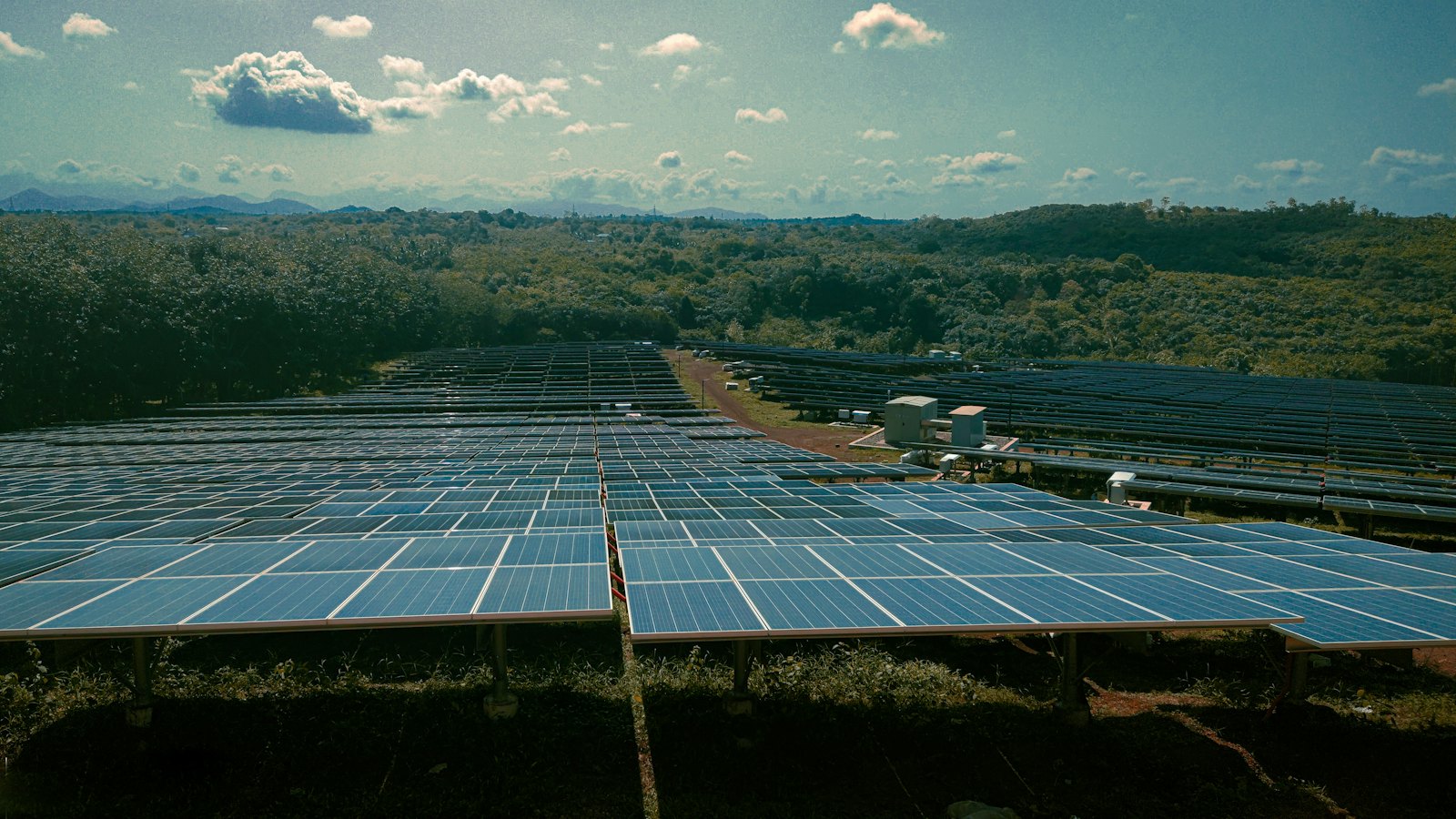
Developed by independent power producer Africa REN at Bokhol, in the Dagana department, the Walo plant pairs 16 MW of solar panels with a 10 MW, 20 MWh battery system. It is the first installation of its kind in West Africa dedicated to frequency regulation: its batteries respond instantly to imbalances between supply and demand, preventing cascading outages. The project, worth about 40 million euros, sells its services to Senelec under a twenty-year contract.
Diass: 56 MWh to shift solar into the evening
On 20 April 2026, Senelec began building a 56 MW, 56 MWh storage plant at Diass, near Blaise Diagne airport, paired with the site’s solar plant. The project, worth more than 23 billion FCFA, is part of the Just Energy Transition Partnership (JET-P) signed with international partners. Its job: store daytime solar electricity and release it as sunlight fades, and stabilise the grid within milliseconds.
“Currently, about 30% of our electricity mix comes from renewable energy, and we are aiming for 40% by 2030 through the JET-P.”Birame Souleye Diop, Minister of Energy, Petroleum and Mines, at the launch of the Diass works (translated from French)
Linguère and Kolda: storage becomes the rule
In late February 2026, Senelec launched one of the largest solar tenders in French-speaking sub-Saharan Africa: 200 MWp at Linguère and 300 MWp at Kolda. The striking point is that each lot must include batteries, for a total of 100 MW and 400 MWh. In other words, Senelec is no longer buying just solar megawatts, but flexibility. The winning bidder must also finance the project (EPCF model), with 24 months of construction planned.
A grid opening up to the region
In August 2025, Senelec’s grid was provisionally synchronised with the West African Power Pool (WAPP). An interconnected grid can import and export electricity, but it must also hold its frequency steady against fluctuations in neighbouring countries. That makes storage even more useful.
What it changes for businesses
A stronger grid, but not overnight
In September 2026, SUTELEC put the evening shortfall at about 150 MW. Over a four-hour peak, that is roughly 600 MWh, far more than the capacity in service or under construction. The new projects will improve things as they come online, over several years.
The peak will stay expensive
Senelec’s medium-voltage tariff charges 65% more per kWh between 7 and 11 pm than off-peak. That structure reflects the real cost of evening electricity, and it encourages every consumer to shift their usage.
The same technology, on your site
What Senelec does at national scale, a business can do at site scale: store energy when it is plentiful and cheap, and use it when the grid weakens. We explain how it works, part by part, in our guide to storage and power cuts. In Senegal, GTech offers systems from 2 MWh to over 10 MWh, in 10 or 20 ft containers that can be combined.
Up to date as of 23 September 2026. Capacities and timelines are those publicly announced by project sponsors and may change. GTech is not involved in any of the projects mentioned.
Frequently asked questions
Why does the grid need batteries?
Solar produces during the day, while demand peaks in the evening, between 7 and 11 pm. Batteries store midday energy and release it in the evening. They also respond to grid fluctuations within milliseconds, which no thermal power plant can do.
What is frequency regulation?
The grid runs at 50 Hz. When demand exceeds supply, frequency drops; when it is lower, frequency rises. Batteries inject or absorb energy instantly to keep it stable, preventing cascading outages. That is Walo’s main job.
Will these projects end power cuts?
They will help, but not overnight. Diass is under construction, and Linguère and Kolda allow 24 months of construction after award. In September 2026 the evening shortfall was about 150 MW, or roughly 600 MWh over a four-hour peak.
Can a business install its own storage?
Yes. It is the same technology at site scale: a battery container connected to your installation that takes over during a cut and lowers your bill at peak times. GTech offers systems in Senegal from 2 MWh to over 10 MWh.
Sources
- pv magazine (7 August 2025), Senegal switches on inaugural solar-plus-storage facility
- Africa REN, Walo Storage commissioning
- Senego (21 April 2026), Senegal launches a strategic battery storage project at Diass
- Dakarmatin, Senelec: a project of more than 23 billion FCFA to stabilise Senegal’s electricity supply
- Solar Perspective, Senelec 500 MWp tender: a strategic turning point for solar and storage
- AllAfrica (1 September 2025), Provisional synchronisation of Senelec with the WAPP
- Senego (16 September 2026), SUTELEC puts the gap behind the 7–11 pm cuts at 150 MW