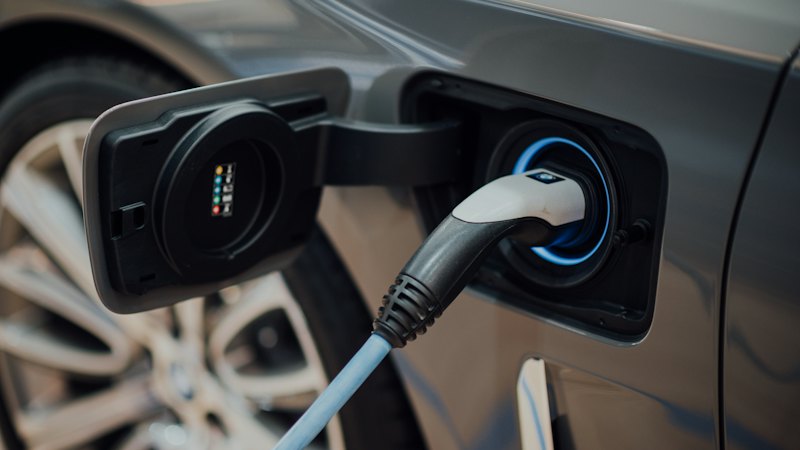
Is an electric car really cleaner when the grid runs on oil?
It is the most serious objection to electric cars in West Africa. It deserves an answer with numbers, not a slogan.
Why this matters
- In 2024, nearly 79% of Senegal’s electricity came from oil-fired power plants, according to Ember.
- Even on that grid, an electric SUV emits about 109 g of CO₂ per km, against 184 g for a comparable petrol SUV, and we deliberately tilted the calculation against electric.
- Charged from solar, it drops to about 8 g per km. The grid gets cleaner every year; a petrol car never will.
“An electric car is just an oil-burning car that moved its exhaust pipe to the power station.” The argument comes up often, and it is not absurd: most of Senegal’s electricity still comes from thermal power plants. The real question is whether, once everything is counted, electric does better or worse than petrol. We ran the numbers with public data, country by country.
Where the electricity comes from, country by country
The think tank Ember compiles electricity generation for every country. For 2024, the latest full year available:
| Country | Main generation sources | Carbon intensity |
|---|---|---|
| Senegal | Oil 79%, solar 9%, wind 5%, hydro 4% | 540 g CO₂e/kWh |
| Ghana | Gas 61%, hydro 35% | 469 g CO₂e/kWh |
| Côte d’Ivoire | Gas 71%, hydro 28% | 405 g CO₂e/kWh |
Senegal has the most carbon-intensive grid of the three because it mostly burns heavy fuel oil. The government speaks of “about 30%” renewables in the mix. The gap with the 20% measured by Ember comes mainly from the difference between installed capacity and energy actually generated: a solar panel produces nothing at night.
The calculation, deliberately tilted against electric
We use the two SUVs from our cost comparison: an electric SUV at 16.8 kWh per 100 km and a petrol SUV at 7.8 L per 100 km, as measured by the EPA. Three choices penalise electric:
- for electricity, we count the emissions of the power plants’ full lifecycle;
- for petrol, we count only what comes out of the exhaust pipe (2.35 kg of CO₂ per litre according to the EPA), without extraction, refining or transport of the fuel;
- we add 20% losses on the power grid.
CO₂ emissions per kilometre driven
Petrol SUV: exhaust only. Electric SUV: lifecycle electricity emissions, with 20% grid losses.
- Electric SUV
- Petrol SUV
Even in Senegal, with the most carbon-intensive grid of the three and a calculation that favours petrol, the electric SUV emits about 40% less CO₂ per kilometre. In Ghana and Côte d’Ivoire, thanks to gas and hydro, it emits about half as much.
What about the battery?
That is the other half of the objection: making a battery emits CO₂. It is true. An electric car therefore leaves the factory with a larger carbon debt than a petrol car, which it then pays back kilometre after kilometre.
The reference study is the International Council on Clean Transportation’s global comparison (ICCT, 2021), which compares both types of car over their whole life, manufacturing included. For a car registered in 2021, electric already emitted 19 to 34% less in India and 37 to 45% less in China. Both grids were more carbon-intensive than Senegal’s is today: about 715 and 600 g CO₂e per kWh in 2021, against 540 in Senegal in 2024.
A petrol car will emit for its whole life what it emits on day one. An electric car gets cleaner every time the grid does.
A grid that is changing fast
Senegal aims for 40% renewables in its electricity mix by 2030, under its Just Energy Transition Partnership (JET-P). It is gradually replacing oil with gas, which emits less, and adding battery storage to make better use of solar power, as at Walo and Diass (see our article on storage). Every solar plant added to the grid lowers the emissions of every electric car plugged into it.
The most powerful lever: charging from the sun
Solar power emits about 48 g CO₂e per kWh over its whole lifecycle, according to the IPCC median value, panel manufacturing included. An electric SUV charged from solar thus falls to about 8 g of CO₂ per kilometre, more than twenty times less than a petrol SUV.
That is the point of GTech private stations, offered for rent in Senegal to customers with at least two vehicles: panels mounted on a carport that shelters the cars and charges them with energy produced on site.
The air we breathe in the city
CO₂ is not the whole story. According to ITDP, Dakar’s entire population is exposed to fine-particle levels above national limits. An electric car has no exhaust pipe: whatever the grid mix, it emits nothing in the streets where people walk, work and take their children to school.
Assumptions: EPA combined consumption (electric SUV 16.8 kWh per 100 km, charging losses included; petrol SUV 7.8 L per 100 km); petrol 2.35 kg of CO₂ per litre at the exhaust; 20% grid losses; Ember 2024 carbon intensities. These figures cover vehicle use; the full picture, manufacturing included, is based on the ICCT study.
Frequently asked questions
What about building the battery?
It creates an upfront “carbon debt” that the car pays back as it drives. The ICCT’s global study (2021) shows that over its full life, an electric car registered in 2021 already emits less than its petrol equivalent, including in India (19 to 34% less) and China (37 to 45% less), two countries whose grids were then more carbon-intensive than Senegal’s.
Why add 20% grid losses?
Part of the electricity generated is lost in the lines before it reaches the socket. We add 20% to consumption to account for it. It is a cautious assumption that penalises electric.
Is the result the same in Ghana and Côte d’Ivoire?
The method is the same, with each country’s own mix. Ghana and Côte d’Ivoire generate mainly from gas and hydro, which emit less than oil. An electric SUV there emits about 94 g and 82 g of CO₂ per km, roughly half a petrol SUV.
Does an electric car improve city air quality?
Yes, whatever the electricity mix: it has no exhaust pipe. Any emissions happen at the power plant, away from the streets where people breathe.
Sources
- Ember, via Our World in Data: lifecycle carbon intensity of electricity, 2024
- Ember, via Our World in Data: share of electricity generation by source, 2024
- US EPA: greenhouse gas emissions from a typical passenger vehicle (8,887 g CO₂ per gallon of petrol)
- US EPA / fueleconomy.gov, 2026 Tesla Model Y and 2025 Toyota RAV4
- ICCT (2021), A global comparison of the life-cycle greenhouse gas emissions of combustion engine and electric passenger cars
- IPCC, AR5 Working Group III, Annex III: lifecycle emissions of electricity supply technologies
- Senego, launch of the Diass battery storage project and the 40% renewables target for 2030 (21 April 2026)
- ITDP (2026), What cities can learn from the Africa region’s first electric BRT