Power cuts from 7 to 11 pm: how battery storage keeps your business running
Since August 2026, Senegal’s grid has been short of power in the evening. A battery storage system lets a business stop suffering those cuts. Here is how it works, part by part.
Why this matters
- In September 2026, Senegal’s grid is about 150 MW short at times of high demand, especially between 7 and 11 pm.
- Even before this strain, 55% of Senegalese businesses reported experiencing power cuts (World Bank, 2024).
- A battery system takes over during a cut and lets medium-voltage customers buy electricity off-peak rather than at a peak rate that is 65% higher.
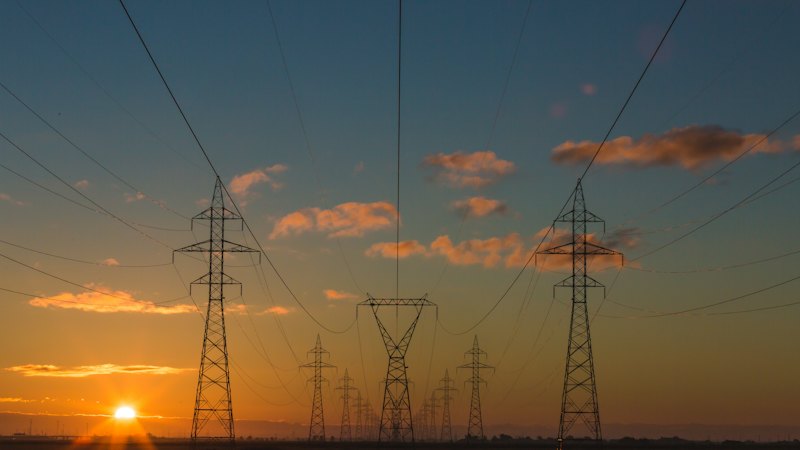
In mid-September 2026, the electricity workers’ union SUTELEC put the gap between available generation and a demand of 1,400 MW at about 150 MW. The tightest period runs from 7 to 11 pm, when, according to its secretary general, households come home from work and switch on air conditioners, televisions and lights. Scheduled maintenance cuts come on top, as in several Dakar districts from 21 to 27 September, between 8 am and 4 pm.
For a bakery, a clinic, a workshop or a factory, every cut means lost production, spoiled goods, damaged equipment or generator fuel. Battery energy storage, or BESS (Battery Energy Storage System), offers an answer. Here is how it works.
The principle: an electricity reservoir
A storage system works like a neighbourhood water tower. It fills up when energy is available and cheap, off-peak or in full sun. It empties when energy is scarce or expensive: during a power cut or at peak time.
Two quantities describe this reservoir, and they are easy to mix up:
- energy, in kWh or MWh: the size of the tank, meaning how much it holds;
- power, in kW or MW: the width of the tap, meaning how fast it can deliver at any moment.
Together they give the running time. A 2 MWh system supplying a site that draws 500 kW lasts 4 hours, exactly the 7 to 11 pm peak window.
What is inside the container
1. The LFP batteries
Thousands of lithium iron phosphate (LFP) cells are assembled into modules, then racks. LFP chemistry is now the standard for stationary storage: stable at high temperatures, cobalt-free, designed for thousands of charge and discharge cycles.
2. The BMS, the cells’ doctor
The Battery Management System continuously measures the voltage, current and temperature of every cell. It balances charge between cells and disconnects the circuit if anything goes wrong.
3. The bidirectional inverter
Batteries store direct current, while your site runs on alternating current. The inverter (or PCS, Power Conversion System) converts in both directions: it charges the batteries from the grid or solar, then returns the energy to your equipment.
4. The EMS, the brain
The Energy Management System decides, minute by minute, when to charge and when to discharge, based on your operating hours, the Senelec tariff, solar output and the state of the grid.
5. Cooling and safety
In Senegal’s climate, thermal management is essential: air or liquid cooling depending on the configuration, plus fire protection. GTech systems are certified to UL, IEC and NFPA standards and delivered pre-wired and factory-tested.
Three ways to use it
Backup during a power cut
When the grid drops out, the system switches to the batteries automatically, within a fraction of a second depending on the design chosen. Sensitive equipment (cold rooms, servers, medical devices, production lines) keeps running.
Peak shifting
For medium-voltage customers, Senelec charges more for electricity between 7 and 11 pm. On the general tariff, a kWh costs 111.91 FCFA off-peak and 184.65 FCFA at peak, 65% more. The battery charges off-peak and supplies the site during the peak.
Midday solar for the evening
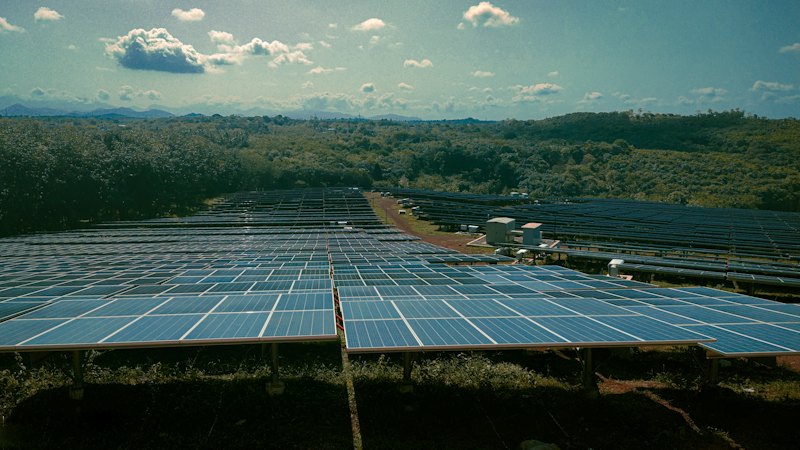
Paired with solar panels, the battery stores the day’s surplus and releases it in the evening, when the grid is under the most strain.
An order of magnitude
Take a medium-voltage site on the general tariff that shifts 2 MWh of its evening consumption from peak to off-peak every day. Losses must be counted: a storage system returns about 85% of the energy it takes in (the reference assumption of the US laboratory NREL). So about 2.35 MWh must be bought off-peak to deliver 2 MWh at peak.
| 2 MWh bought at peak (184.65 FCFA/kWh) | 369,300 FCFA |
| 2.35 MWh bought off-peak (111.91 FCFA/kWh) | 263,300 FCFA |
| Savings per evening | ≈ 106,000 FCFA |
| Savings over a year | ≈ 38.7 million FCFA |
On top of that comes everything avoided power cuts no longer cost: lost output, spoiled stock and generator fuel. According to the International Finance Corporation (IFC), generator fuel alone averages 0.30 dollars per kWh, about twice the average cost of grid electricity. In Senegal, diesel rose to 755 FCFA a litre on 15 August 2026.
The same choice as Senelec
Battery storage is no longer a technology of the future in Senegal. The grid already benefits from it at Walo, a private plant under contract with Senelec. Senelec began building a 56 MWh storage plant at Diass in April 2026 and requires batteries in its tender for 500 MWp of solar at Linguère and Kolda. We cover these projects in our storage news article.
At business scale, the logic is the same: produce, store and consume at the right time. In Senegal, GTech offers five storage configurations, from the compact cabinet for small sites to modular solutions for solar plants, in 10 or 20 ft containers that can be combined.
The calculation above illustrates the mechanism on a typical case; it is not an offer. Every site must be assessed from its own bills and actual load curve. Power cut figures come from the World Bank Enterprise Survey (2024) and SUTELEC (September 2026).
Frequently asked questions
How long can a battery power my site?
Divide the stored energy by the power drawn. A 2 MWh system powers a 500 kW site for 4 hours, the whole 7 to 11 pm peak window. Sizing is based on your consumption records.
Does a battery replace the diesel generator?
It sharply reduces how much the generator runs, and with it fuel, noise and maintenance. Many sites keep a generator as a last resort for very long outages: the battery covers everyday cuts, the generator the exceptional ones.
Are lithium batteries safe?
GTech systems use lithium iron phosphate (LFP) chemistry, known for its thermal stability. They include fire protection certified to UL, IEC and NFPA standards, and are delivered pre-wired and factory-tested.
What do you need to assess my site?
Your Senelec bills for the last twelve months, your tariff and subscribed power, and if possible a load curve (consumption readings every 15 minutes). Tell us too how often power cuts happen and how long they last.
Sources
- Senego (16 September 2026), Senelec: SUTELEC puts the gap behind the 7–11 pm cuts at 150 MW
- Œil d’Afrique (20 September 2026), Senelec power cuts in Dakar from 21 to 27 September
- World Bank, Enterprise Surveys: Senegal 2024
- CRSE, Senelec tariff grid applicable from 1 January 2026
- NREL, Annual Technology Baseline: utility-scale battery storage (85% round-trip efficiency)
- IFC (2019), The Dirty Footprint of the Broken Grid
- Africa Radio, Senegal: diesel price from 15 August 2026